← Home · Roadway

Flexible Pavement Design for Coastal Infrastructure in Corpus Christi

Together, we solve the challenges of tomorrow.

LEARN MORE →

In Corpus Christi, the combination of highly plastic Beaumont Formation clays and a shallow water table creates a pavement design scenario that demands more than a standard catalog solution. We routinely see that the difference between a pavement section that lasts 20 years and one that fails in five comes down to how accurately the subgrade moisture susceptibility is modeled during the flexible pavement design phase. When we run resilient modulus tests on undisturbed specimens taken from the coastal plain, the values often drop 40 percent below what a simple CBR correlation would predict once saturation exceeds optimum. That gap is exactly why our team insists on in-situ permeability testing during the site investigation, because drainage behavior dictates whether the base course will pump fines or stay competent under repeated loading.

A flexible pavement designed without accounting for the Beaumont clay's moisture sensitivity will exhibit alligator cracking within the first three duty cycles of a wet summer in Corpus Christi.

Methodology and scope

The structural analysis we perform for flexible pavement design follows the AASHTO 1993 mechanistic-empirical framework, but the inputs come directly from laboratory characterization of local materials. We run repeated load triaxial tests to establish the resilient modulus of both the subgrade and the proposed base and subbase layers, then feed those curves into layered elastic models that predict tensile strain at the bottom of the asphalt and compressive strain on top of the subgrade. In our Corpus Christi projects, we have found that including a lime-treated subgrade layer of at least six inches fundamentally changes the fatigue life projection, and we validate that treatment specification with Atterberg limits before and after mixing to confirm the plasticity index drops below the threshold where swelling becomes a long-term risk.
Flexible Pavement Design for Coastal Infrastructure in Corpus Christi
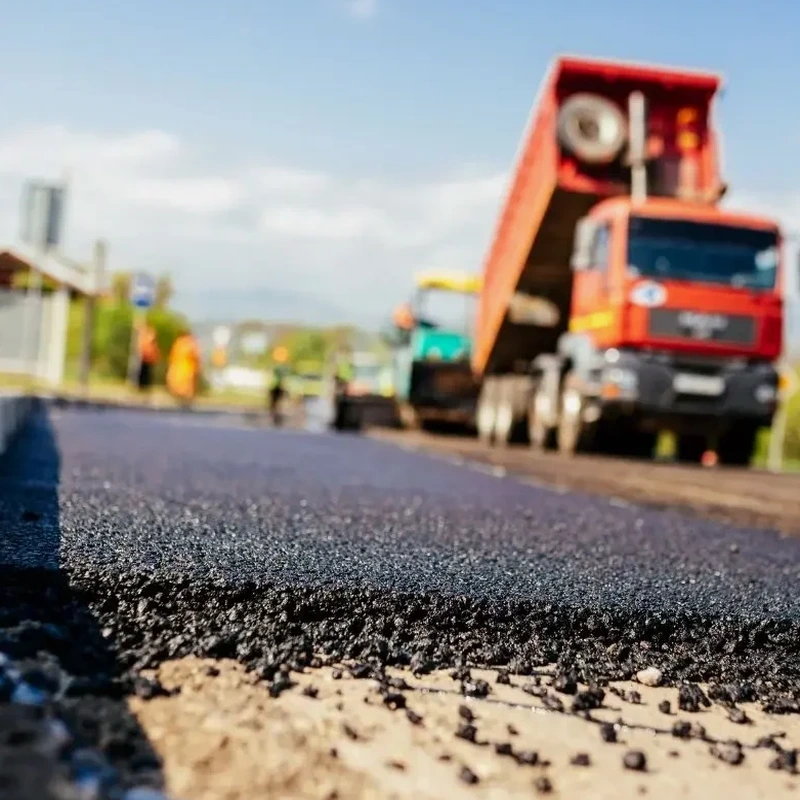
Technical reference image — Corpus Christi

Local geotechnical context

We investigated a commercial parking lot off SPID near the Laguna Madre where the original flexible pavement design had been based on a presumptive CBR of 5 without any subgrade stabilization. After three years of truck traffic and seasonal water table fluctuation, the asphalt mat had disintegrated into interconnected fatigue cracks and the base course had contaminated with clay fines pumped upward through the aggregate. The reconstruction required full-depth reclamation with cement stabilization, and the re-designed section added a geotextile separator that the original engineer had omitted. That case illustrates what we tell every client in the Coastal Bend: the cost of a proper geotechnical investigation and flexible pavement design is a fraction of the cost of premature reconstruction, especially when the pavement serves port-related logistics facilities where downtime is not an option.

Need a geotechnical assessment?

Reply within 24h.

Email: contact@geotechnical-engineering1.org

Technical data

ParameterTypical value
Design methodologyAASHTO 1993 and MEPDG inputs
Subgrade characterizationResilient modulus (Mr) via triaxial
Traffic loadingESAL projections, 20-year design life
Asphalt layer analysisTensile strain at binder course bottom
Subgrade failure criterionVertical compressive strain at formation
Moisture conditioningSaturated Mr testing for worst-case scenario

Related services

01

Structural Section Design

We determine the required thickness of asphalt, base, and subbase layers using layered elastic analysis calibrated with resilient modulus data from our AASHTO-accredited laboratory. The output is a pavement section optimized for the specific traffic spectrum and subgrade conditions at your Corpus Christi site.

02

Subgrade Stabilization Specification

Where expansive Beaumont clays are present, we design lime or cement treatment protocols including target PI reduction, minimum strength gain at seven days, and depth of treatment based on the stress influence zone calculated from the pavement loading.

Regulatory framework

AASHTO Guide for Design of Pavement Structures (1993), AASHTO T 307: Determining the Resilient Modulus of Soils and Aggregate Materials, ASTM D1557-12: Modified Proctor Compaction, TxDOT Flexible Pavement Design Manual (FPS 21)

Questions and answers

What is the typical cost for a flexible pavement design study in Corpus Christi?
How do the coastal clays in Corpus Christi affect pavement performance?

The Beaumont Formation clays that underlie much of Corpus Christi have plasticity indices frequently exceeding 30, which means they undergo significant volume change with seasonal moisture variation. In a flexible pavement, this translates to differential heave during wet periods and shrinkage cracking during drought, both of which propagate through the asphalt layer unless the subgrade is chemically stabilized or the pavement section includes a sufficiently thick, non-expansive select fill cap.

What traffic loading assumptions do you use for port-area pavements?

For pavements serving the Port of Corpus Christi or associated logistics terminals, we work with the client to develop 20-year ESAL projections that account for channel depth, container throughput, and the specific axle configurations of the truck fleet operating on the pavement. The load spectra are then input into the AASHTO MEPDG framework to evaluate both fatigue and rutting performance.

Do you need to see the existing pavement condition before designing a rehabilitation?

Yes, a forensic evaluation of the existing pavement is essential. We core the asphalt to measure remaining thickness, dig test pits to inspect base course contamination, and run deflection testing where possible. The distress type and extent tell us whether the failure mechanism is subgrade-related, structural, or simply age-related oxidation, and that diagnosis drives the rehabilitation strategy.
Location and service area

We serve projects across Corpus Christi and surrounding areas.

View larger map