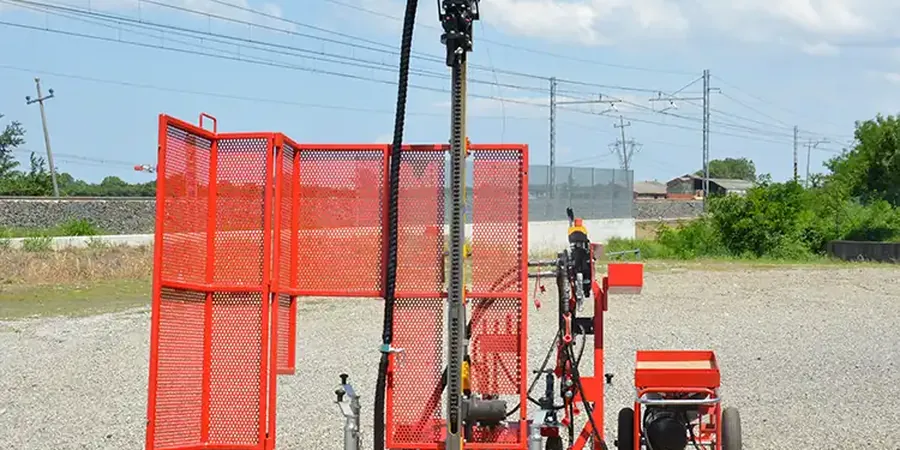
Roadway engineering in Corpus Christi encompasses the planning, analysis, and structural design of pavements and subgrade systems that must withstand South Texas' unique combination of expansive clay soils, high temperatures, and occasional intense rainfall. This category covers everything from initial soil investigations and California Bearing Ratio studies to the final pavement structure, whether flexible asphalt or rigid concrete. Given the region's role as a major port and energy hub, the roadway network here carries disproportionate heavy truck traffic, making proper geotechnical input not just a technicality but a fundamental requirement for long-term performance and safety.
The local geology presents specific challenges that directly influence roadway design. Much of Corpus Christi sits on the Beaumont Formation, characterized by Pleistocene-age clay and silt deposits with moderate to high shrink-swell potential. These soils experience significant volume changes with moisture fluctuation, a critical factor in a climate where drought can alternate with tropical storms. Additionally, the low-lying coastal plain has areas with high groundwater tables and localized lenses of poorly consolidated sands. Without thorough CBR study for road design and subgrade stabilization, pavements here are vulnerable to differential heaving, rutting, and premature fatigue cracking that can reduce a road's service life by decades.
Design in Corpus Christi must adhere to national standards established by the American Association of State Highway and Transportation Officials (AASHTO), specifically the AASHTO Guide for Design of Pavement Structures. At the state level, the Texas Department of Transportation (TxDOT) provides mandatory specifications through its Pavement Design Guide and standard specification manuals, which include regional amendments for the Coastal Bend area. These documents outline required material properties, layer coefficients, and drainage considerations. Municipal projects within the city also reference the City of Corpus Christi's Unified Development Code and infrastructure design standards, which often mandate minimum pavement sections based on traffic classifications and require geotechnical reports sealed by a licensed Professional Engineer in Texas.
The types of projects that demand rigorous roadway geotechnical services range from municipal street reconstructions and new residential subdivision roads to high-volume arterial expansions and heavy-duty industrial access routes serving the Port of Corpus Christi and nearby petrochemical facilities. Each application dictates a different structural number and layer configuration. A residential collector might be adequately served by a conventional flexible pavement design with a stabilized base, while a concrete rigid pavement design often proves more economical over the life cycle for intersections and bus lanes subjected to standing loads. Port and refinery haul roads, meanwhile, frequently require full-depth reclamation or deep soil mixing to address very weak subgrades.
The main challenges stem from the Beaumont Formation clays, which exhibit high plasticity and shrink-swell behavior. Seasonal moisture changes cause volume fluctuations that can heave or settle pavements unevenly. Additionally, low-lying areas often have high groundwater and soft, compressible soils, requiring subgrade stabilization or deeper structural sections to prevent premature failure under traffic loads.
Roadway pavement design in Corpus Christi follows the AASHTO Guide for Design of Pavement Structures as the national framework, supplemented by the TxDOT Pavement Design Guide and Standard Specifications. For city-maintained streets, the Corpus Christi Unified Development Code provides additional minimum thickness and material requirements based on functional classification and projected traffic volumes.
Heavy truck traffic from the port and energy sector significantly increases the required structural capacity of pavements. Designs must account for high equivalent single axle loads (ESALs) over the design life, often necessitating thicker asphalt or concrete layers, chemically stabilized bases, and rigorous subgrade compaction. Ignoring these loads leads to rapid rutting and fatigue cracking.
A properly engineered flexible pavement in Corpus Christi typically targets a 15- to 20-year structural design life before major rehabilitation, while rigid concrete pavements are often designed for 30 to 50 years. These lifespans depend heavily on accurate CBR testing, drainage provisions, and adherence to TxDOT specifications during construction to mitigate the effects of expansive soils and heavy loads.
We serve projects across Corpus Christi and surrounding areas.