HomeFoundations

Foundations in Corpus Christi

Together, we solve the challenges of tomorrow.

LEARN MORE →
Foundations in Corpus Christi

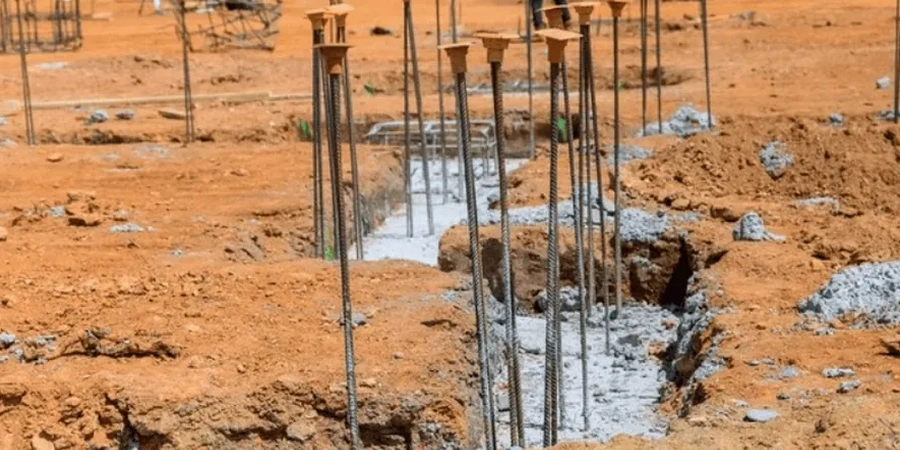
Foundation systems in Corpus Christi must contend with expansive clay soils, loose bay deposits, and a high water table that demands strict adherence to IBC Chapter 18 and local Coastal Zone regulations. Our approach integrates deep [pile foundation design](piles) to bypass unstable near-surface strata, transferring loads to competent bearing layers while mitigating the risks of differential settlement and scour. We also apply advanced ground improvement where surficial [soil stabilization](soil-stabilization) can enhance bearing capacity for lightly loaded structures.

This category supports coastal residential builds on raised pier systems, mid-rise commercial blocks near the downtown corridor, and critical port infrastructure requiring immediate settlement control. For projects with heavy column loads or tension demands, we couple the pile design with [deep foundation testing](deep-foundation-testing) to verify capacity and integrity per ASTM standards. Every solution is calibrated to resist the corrosive marine environment and hurricane-force wind uplift that define the Texas Gulf Coast.

Available services

Pile foundation design

→ View details

Need a geotechnical assessment?

Reply within 24h.

Email: contact@geotechnical-engineering1.org

Technical data

ParameterTypical value
Unbonded length (typical range)10 to 25 ft depending on failure plane geometry
Bond length (Beaumont clay)15 to 35 ft, verified by load test at critical sections
Design working load per strand (0.6 in. grade 270)36 to 44 kips for temporary conditions
Proof test acceptance133% of design load, 10-minute hold per PTI DC35.1
Corrosion protection for permanent anchorsClass I double protection per PTI, factory-sheathed strand
Minimum grout cover0.5 in. centralized for bonded length
Typical anchor inclination15 to 30 degrees below horizontal

Related services

01

Temporary Excavation Tiebacks

Active prestressed anchors for soldier pile and lagging walls along deep utility cuts and basement excavations in downtown Corpus Christi. Design includes unbonded length to clear the Rankine failure wedge, bonded length sized from SPT or CPT data in Beaumont clay, and 133-percent proof testing with lift-off verification after lock-off.

02

Permanent Seawall and Floodwall Anchors

Class I double-corrosion-protected anchors for marine bulkheads, flood protection walls, and bridge abutment tie-downs exposed to brackish water and salt spray along the Corpus Christi Bayfront. PTI-compliant sheathing, epoxy-coated bearing plates, and encapsulated wedge assemblies specified for 75-year service life.

03

Uplift and Overturning Restraint Anchors

Passive and active systems for mat foundations, light towers, and prefabricated buildings where ASCE 7 wind uplift exceeds dead load resistance. Helical anchors and grouted high-strength bars installed through expansive surface clays into deeper, moisture-stable Pleistocene deposits below 15 feet, with load test verification per ASTM D3689 for helical piles or incremental movement criteria for grouted anchors.

Regulatory framework

PTI DC35.1 — Recommendations for Prestressed Rock and Soil Anchors, ASCE 7-22 — Minimum Design Loads (hurricane wind uplift provisions), ASTM A416 — Low-Relaxation Seven-Wire Steel Strand for Prestressed Concrete, FHWA-NHI-05-039 — Micropile Design and Construction (bond zone references)

Questions and answers

How much does anchor design and testing cost for a typical Corpus Christi project?
What's the difference between an active and a passive anchor?

An active anchor is stressed and locked off against the structure immediately after grout reaches strength — it actively applies a compressive force to the wall or slab. A passive anchor doesn't get stressed; it only develops resistance once the structure moves enough to engage the tendon, so it's more common in rock bolts or soil nails where some deformation is acceptable before the system stiffens.

Why does the Beaumont clay in Corpus Christi affect anchor bond length?

Beaumont Formation clays here have a stiff, overconsolidated crust in the top 10 to 15 feet, underlain by softer, normally consolidated material. The transition zone can cause grout-to-soil bond stress to drop by half over just a few feet of depth. Longer bond lengths or post-grouting through tube-a-manchette systems compensate for the weaker zone, and pre-production testing identifies exactly where the bond stress reduction occurs.

Do permanent anchors in Corpus Christi need corrosion protection?

Absolutely. The combination of warm Gulf Coast temperatures, brackish groundwater near the Bayfront, and occasional salt spray from hurricane storm surge makes Class I double-corrosion protection mandatory for any anchor with a service life beyond two years. This means factory-extruded polyethylene sheathing over the full unbonded length, heat-shrink or O-ring seals at couplers and trumpets, and centralized grout cover verified with spacers every 10 feet.

This service complements our laboratory testing work for a complete project analysis.

Location and service area

We serve projects across Corpus Christi and surrounding areas.

View larger map