Together, we solve the challenges of tomorrow.
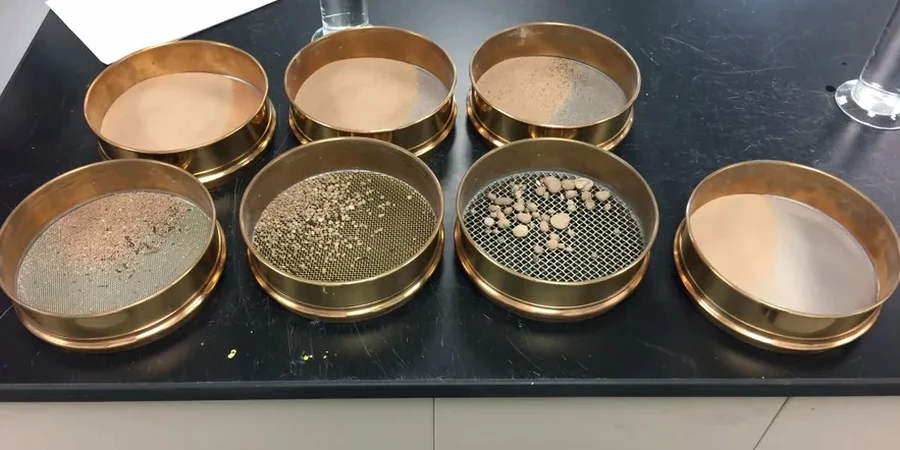
LEARN MORE →Geotechnical laboratory testing forms the empirical backbone of every safe and economical construction project in the Coastal Bend region. In Corpus Christi, where expansive clay formations, loose windblown sands, and soft bay deposits coexist within short distances, a comprehensive grain size analysis (sieve + hydrometer) program provides the fundamental data engineers need to predict how soils will behave under load, during excavation, and when exposed to water. The laboratory category encompasses all standardized procedures that quantify the physical, mechanical, and chemical properties of soil and rock specimens recovered from exploratory borings and test pits. Without this controlled environment testing, even the most sophisticated design models remain unverified assumptions.
The local geology of Corpus Christi presents a layered stratigraphy that demands meticulous laboratory characterization. The city rests on the Pleistocene-age Beaumont Formation, a complex sequence of interbedded clays, silts, and sands deposited by ancient fluvial-deltaic systems. These soils frequently contain montmorillonite clay minerals that exhibit extreme volume changes with moisture fluctuation, a condition that has caused widespread foundation distress throughout the region. Additionally, the proximity to Nueces Bay and Corpus Christi Bay means many project sites encounter compressible estuarine deposits with high organic content and low shear strength. Accurate determination of Atterberg limits becomes critical here, as the liquid limit and plasticity index directly correlate with a soil's swell potential and its classification under the Unified Soil Classification System.
All laboratory procedures performed in Corpus Christi must conform to the standards established by the American Society for Testing and Materials, specifically those adopted by ASTM International and referenced in the Texas Department of Transportation's TxDOT Manual and local building codes. The City of Corpus Christi Building Services Division enforces the International Building Code, which requires geotechnical investigations to be conducted in accordance with accepted engineering practice, a mandate that implicitly demands ASTM-compliant laboratory testing. Common standards include ASTM D422 for particle-size analysis, ASTM D4318 for liquid limit, plastic limit, and plasticity index, and ASTM D2487 for classification. For transportation infrastructure, TxDOT's Test Procedures Tex-100-E through Tex-124-E govern materials testing and must be followed precisely when working on state-funded roadway, bridge, or drainage projects within Nueces County.
The types of projects that depend on thorough geotechnical laboratory programs are diverse and ever-present in this growing metropolitan area. Deep foundation design for high-rise structures along Shoreline Boulevard and the downtown corridor requires consolidation testing to estimate settlement and unconfined compressive strength tests on rock cores when socketed into the underlying caliche or limestone. Shallow foundation recommendations for residential subdivisions in the Calallen and Flour Bluff areas rely heavily on the expansive potential assessed through Atterberg limits and the shear strength parameters derived from direct shear or triaxial compression tests. Coastal protection structures, bulkheads, and marina developments demand specialized testing to evaluate the erosion resistance and permeability of local soils. Even pavement design for the expanding network of arterials serving Port Corpus Christi traffic must be based on laboratory-determined California Bearing Ratio values and resilient modulus inputs from repeated load triaxial testing.
A standard program encompasses index property tests such as moisture content, grain size analysis with sieve and hydrometer, and Atterberg limits to classify soils per ASTM D2487. Engineering property tests follow, including consolidation, direct shear, triaxial compression, and unconfined compressive strength tests. Chemical testing for sulfates, chlorides, and organic content is also common given the coastal environment and potential for sulfate attack on concrete.
Atterberg limits, specifically the liquid limit and plasticity index, quantify a fine-grained soil's affinity for water and its potential for shrink-swell behavior. The Beaumont Formation clays prevalent across Corpus Christi can exhibit very high plasticity indices, indicating significant volume change potential with seasonal moisture fluctuation. This directly influences foundation depth recommendations, the need for moisture conditioning during compaction, and the selection of suitable borrow materials.
The City of Corpus Christi adopts the International Building Code, which mandates that geotechnical investigations follow accepted engineering practice, effectively requiring ASTM or TxDOT standard compliance. ASTM D422 governs particle-size analysis, D4318 covers Atterberg limits, and D2487 provides the classification framework. For TxDOT-funded infrastructure, additional test procedures like Tex-104-E for liquid limit apply, and laboratories performing this work must maintain current AASHTO accreditation.
A full grain size analysis combining sieve and hydrometer methods is required when the soil contains more than approximately 10 percent fines passing the No. 200 sieve. In Corpus Christi, many Beaumont Formation soils and bay deposits contain significant silt and clay fractions. The hydrometer analysis quantifies the distribution of these fine particles, which is essential for accurate USCS classification, predicting drainage characteristics, assessing frost susceptibility, and evaluating liquefaction potential in saturated sandy silts.
We serve projects across Corpus Christi and surrounding areas.