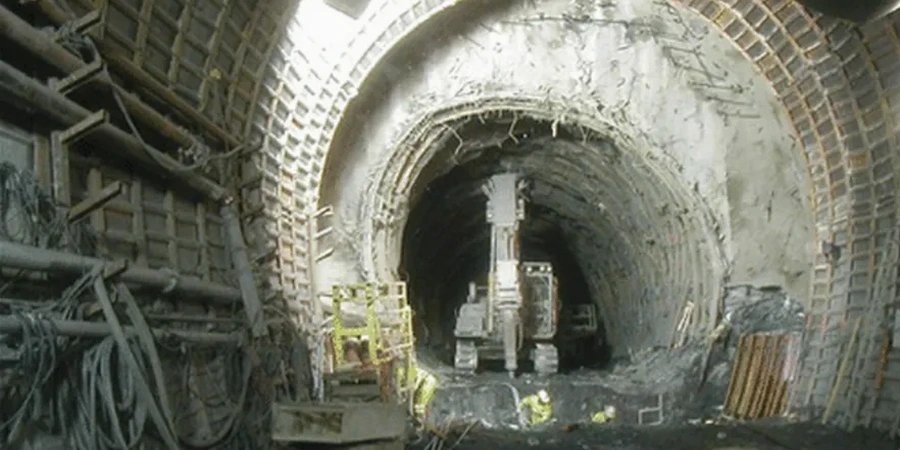
The most expensive mistake in Corpus Christi tunneling is treating Beaumont clay like stiff Dallas shale. It is not. Excavating below the water table here means dealing with squeezing ground that can close a tunnel face in hours. Contractors who skip a proper soft ground analysis end up with collapsed headings, damaged utilities, and six-figure change orders. The Port of Corpus Christi area sits on Pleistocene and Holocene deposits with undrained shear strengths often below 25 kPa. That demands a very different approach. We combine field investigation with advanced constitutive modeling to predict deformation before the TBM ever arrives on site. For shallow urban crossings along Shoreline Boulevard or beneath the refinery corridors, we pair the analysis with deep excavation monitoring to control surface settlements in real time.
Tunneling in Corpus Christi means managing two pressures: the hydrostatic head 2 meters down and the swelling potential of Beaumont clay when it dries.