← Home · In-Situ Testing

Field Permeability Testing (Lefranc/Lugeon) in Corpus Christi – In-Situ Hydraulic Conductivity for Foundation Design

Together, we solve the challenges of tomorrow.

LEARN MORE →

Corpus Christi sits at an average elevation of just 7 feet above sea level, where the boundary between the Nueces River floodplain and the clay-sand interfaces of the Beaumont Formation defines every underground project. With a metropolitan population surpassing 420,000 and major port expansions underway, the demand for precise geotechnical characterization has never been higher. The Lefranc and Lugeon in-situ permeability tests provide direct measurements of hydraulic conductivity that laboratory remolding simply cannot replicate, especially in the stratified Pleistocene deposits found beneath the Coastal Bend. The CPT test often serves as a preliminary screening tool to identify the precise horizons where a permeability test becomes essential, allowing the engineering team to target specific sandy lenses or fractured clay zones that control groundwater flow toward excavations.

A single Lugeon test in fractured Beaumont clay can reveal flow regimes that completely change the dewatering strategy for a deep excavation, saving weeks of downtime on the Gulf Coast.

Methodology and scope

The field setup for a Lugeon test in Corpus Christi typically involves a rotary drill rig fitted with a wireline system to advance through the stiff Beaumont clays, followed by a pneumatic packer assembly inflated to seal off the test interval. Water is injected at stepped pressures while a digital flowmeter and pressure transducer log real-time data, generating the characteristic Lugeon diagram that reveals whether the rock mass or soil matrix dilates, washes out, or exhibits laminar flow. In shallow alluvial deposits near Oso Creek or the ship channel, the Lefranc method deploys a slotted casing with a clean gravel pack and a constant-head or falling-head configuration, often conducted within the same borehole used for SPT drilling to correlate permeability with blow counts and soil classification per ASTM D2487.
Field Permeability Testing (Lefranc/Lugeon) in Corpus Christi – In-Situ Hydraulic Conductivity for Foundation Design
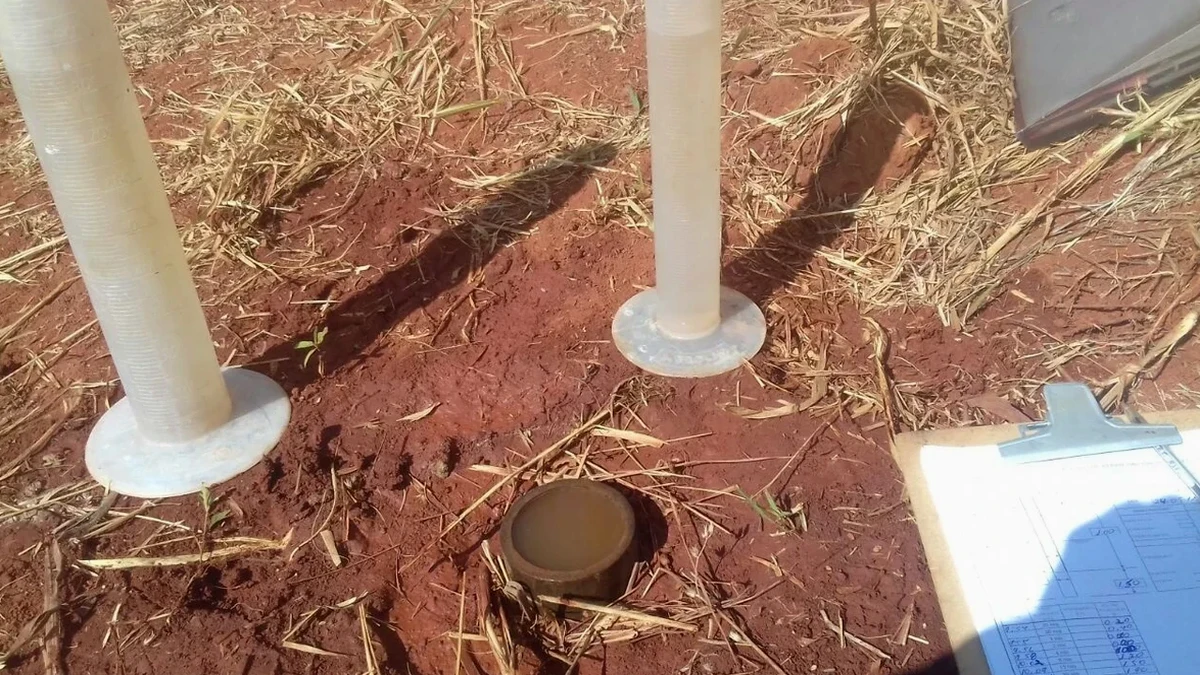
Technical reference image — Corpus Christi

Local considerations

In Corpus Christi, we often see contractors underestimate the vertical connectivity of the Beaumont Formation’s oxidized fissures, which can transmit water from the shallow sand stringers directly into a seemingly dry excavation at depths of 20 to 30 feet. A project on North Padre Island Drive encountered a continuous sand seam at 18 feet that a standard boring log classified as silty clay, but the Lefranc test returned a permeability two orders of magnitude higher than lab estimates. Relying solely on grain-size correlations or textbook values for plastic clays in this region invites dewatering failures and bottom heave. The Lugeon test becomes equally critical for the lower Wilcox Group sandstone encountered in deeper infrastructure, where solution cavities and open joints can create preferential flow paths that undermine slope stability during cut-and-cover operations along the La Quinta Channel extension.

Need a geotechnical assessment?

Reply within 24h.

Email: contact@geotechnical-engineering1.org

Technical parameters

ParameterTypical value
Test methodLefranc (constant / falling head) and Lugeon (pressure packer)
Standard referenceASTM D4630, ASTM D4631; USBR 6510 procedures
Applicable soil/rockSoils (Lefranc) and fractured rock or stiff clay (Lugeon)
Borehole diameterNX to HQ (76–96 mm) for packer deployment; 4–6 in for Lefranc
Pressure stages (Lugeon)Typically 5 steps: Pmin, Pmid, Pmax, Pmid, Pmin; up to 10 bar
Measurement range1 × 10⁻⁷ to 1 × 10⁻² cm/s depending on formation and test duration
Reporting outputLugeon value (Lu), hydraulic conductivity k (cm/s), transmissivity estimate

Associated technical services

01

Lugeon Packer Testing in Rock and Stiff Clay

Downhole packer injection at stepped pressures per USBR 6510, with real-time digital flow and pressure monitoring to capture nonlinear flow behavior in fractured Beaumont Formation clays and Wilcox sandstone.

02

Lefranc Variable-Head Testing in Soils

Constant-head and falling-head configurations within cased boreholes, using slotted screens and clean filter packs to measure hydraulic conductivity in the Nueces River alluvium and coastal terrace deposits.

03

Combined SPT-Permeability Profiling

Integrated program where each SPT interval is followed by a targeted Lefranc test, building a continuous profile of strength and permeability for dewatering design at port expansion and flood control projects.

04

Dewatering Feasibility and Pumping Test Support

Interpretation of Lugeon and Lefranc data to estimate well yields, radius of influence, and required dewatering well spacing for deep excavations near the Inner Harbor and the La Quinta Channel.

Applicable standards

ASTM D4630-19 – Standard Test Method for Determining Transmissivity and Storage Coefficient of Low-Permeability Rocks by In Situ Measurements Using the Constant Head Injection Test, ASTM D4631-18 – Standard Test Method for Determining Transmissivity and Storativity of Low Permeability Rocks by In Situ Measurements Using Pressure Pulse Technique, USBR 6510 – Field Permeability Test Procedures (Lefranc and Lugeon methods, Bureau of Reclamation)

Frequently asked questions

How much does a Lefranc or Lugeon permeability test cost in Corpus Christi?

Field permeability testing in the Corpus Christi area typically ranges from US$600 to US$1,160 per test interval, depending on borehole depth, access conditions, and whether the test is performed during an existing drilling program or as a standalone mobilization. Projects near the ship channel or on barrier islands may involve additional logistics for rig access and tide coordination.

When is a Lugeon test required instead of a Lefranc test?

A Lugeon test is specified when the formation behaves more like rock than soil — stiff to hard Beaumont clay with fractures, the caliche horizons common in the Corpus Christi area, or the Wilcox sandstone encountered in deeper borings. The packer system isolates a specific interval and injects water under pressure, measuring how the formation responds across multiple pressure stages. The Lefranc method applies to granular soils and soft clays where a simple constant-head or falling-head test in an open borehole provides reliable hydraulic conductivity.

How long does each permeability test take in the field?

A single Lefranc test typically requires 45 to 90 minutes including stabilization time, while a complete 5-stage Lugeon test spans 60 to 120 minutes depending on formation permeability. Low-permeability clays common in Corpus Christi may need longer pressure-step durations to reach steady-state flow. The test interval setup — drilling to depth, cleaning the borehole, installing the packer — adds additional rig time that the field team coordinates with the overall site investigation schedule.

What factors affect the accuracy of in-situ permeability measurements in the Coastal Bend region?

Several local factors influence measurement quality: the presence of gas in shallow sediments near the Nueces River basin can cause erratic flow readings; tidal fluctuations in the shallow aquifer affect baseline water levels during testing near the bayfront and the Inner Harbor; and the heterogeneous nature of the Beaumont Formation, where sand stringers and silt partings create vertical anisotropy, demands careful selection of test intervals. The field team mitigates these effects by using downhole pressure transducers and running calibration checks before each test sequence.
Location and service area

We serve projects across Corpus Christi and surrounding areas.

View larger map